

Home > Products > Hyulim Robot Range of Products > Hyulim Cartesian Robot

Hyulim Cartesian Robot Supplier in India

Single-Axis and Multi-Axis Linear Robots for Industrial Automation

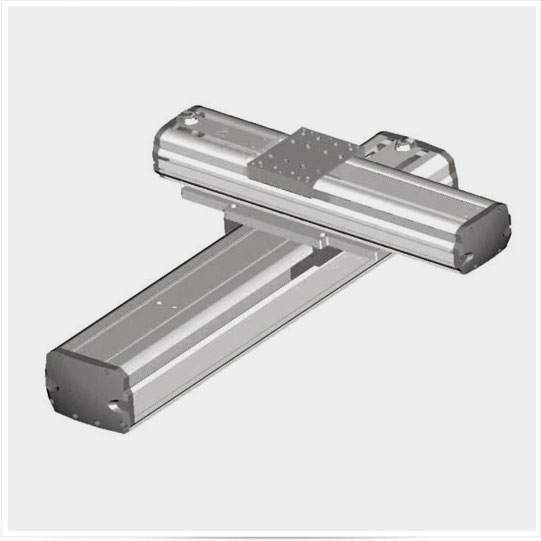
Looking for a Hyulim Cartesian robot in India for pick-and-place, component transfer, dispensing, machine loading, assembly or inspection automation? Orbital Mekatronik supplies Hyulim Cartesian robot systems for controlled linear movement across one or more axes. Available configurations support compact applications, long-stroke movement, clean manufacturing and high-payload industrial handling.
safety automation

Hyulim Cartesian Robot Supply and Project Support

We support machine manufacturers, automation integrators, equipment builders and industrial plants with Cartesian robot selection, axis configuration, payload evaluation and commercial quotations. Hyulim’s official industrial robot portfolio includes DRG and DRGC Cartesian robot families along with additional actuator, linear, transfer, controller and automation products.

New Automation · Machine Upgrade · Robot Replacement

Share the required number of axes, X-Y-Z stroke, component weight, end-effector weight, movement speed, repeatability and installation orientation. Our team will help shortlist a suitable Hyulim Cartesian robot configuration for technical evaluation.

Why Choose Orbital Mekatronik for Hyulim Cartesian Robots?
Support for single-axis and multi-axis robot selection
Guidance on stroke, speed and payload requirements
Straight and parallel motor configurations
Clean Cartesian robot options
Assistance with horizontal and vertical loading
Project quotations for OEM and automation requirements
Industrial Applications We Serve
Electrical and electronics manufacturing
Automotive-component production
Semiconductor and clean-process equipment
Packaging and consumer-product machinery
Medical and laboratory automation
Assembly, dispensing and inspection systems
Get a Quote for a Hyulim Cartesian Robot

Need Hyulim Cartesian robot pricing or help selecting the correct model? Share the movement stroke for each axis,
payload including tooling, required speed, cycle time, repeatability, mounting orientation and project quantity for a suitable quotation.

Cartesian Robot Project and Procurement Support

We Support

  • OEM machine manufacturers
  • Industrial automation integrators
  • Special-purpose machine builders
  • Semiconductor-equipment manufacturers
  • Production engineering departments
  • New, retrofit and expansion projects

Get support for single actuators, multi-axis arrangements, clean configurations, controllers and project-based robot requirements.

Hyulim Cartesian Robots for Industrial Automation

A Cartesian robot can move a component or tool through programmed linear coordinates.

Depending on the selected axes and end-effector, it can be used for:

  • Pick-and-place
  • Component transfer
  • Machine tending
  • Loading and unloading
  • Adhesive dispensing
  • Sealant application
  • Screwdriving
  • Press loading
  • Product inspection
  • Camera positioning
  • Measurement and testing
  • Sorting and rejection
  • Packaging
  • Palletising
  • Laboratory automation

Cartesian Robot or SCARA Robot?

A Cartesian robot may be preferred when the application requires:

  • A rectangular working envelope
  • Independent X, Y and Z strokes
  • Long linear movement
  • Custom axis lengths
  • Overhead gantry installation
  • Heavy loads over a defined path
  • Simple linear machine integration

A SCARA robot may be preferred for high-speed horizontal movement, compact assembly and repetitive pick-and-place within a circular working area.

The decision should be based on the actual movement path, payload, cycle time, installation space and required flexibility.

Cartesian Robot Selection Guide

Stroke and Working Range

Specify the actual travel required for every axis: X-axis stroke, Y-axis stroke, Z-axis stroke, Rotary-axis angle, when required. Allow additional movement for product clearance, acceleration, tooling and machine access.

Payload

The robot payload must include: Product weight, Gripper or end-effector, Tooling, Sensors, Cables and fittings carried by the axis, Any moving fixture. Vertical-axis payload capacity may be lower than horizontal capacity, so the mounting direction must always be stated.

Speed and Cycle Time

Maximum published speed does not automatically represent the achievable production speed. Actual cycle time depends on: Travel distance, Payload, Acceleration, Deceleration, Settling time, Number of stops, Tool operation, Product-handling time.

Repeatability

Repeatability indicates how consistently the robot can return to a programmed position. The required value should be defined according to the actual process. General transfer, precision insertion, inspection and dispensing applications may require different levels of repeatability.

Mounting Orientation

Confirm whether each axis will operate: Horizontally, Vertically, Wall-mounted, Inverted, As an overhead gantry. Payload, stroke and speed must be checked for the intended orientation.

Drive and Motor Configuration

Depending on the selected family and application, the configuration may vary by: Ballscrew lead, Motor capacity, Straight or parallel motor arrangement, Encoder type, Stroke, Speed requirement, Load direction. The complete model code should be confirmed before ordering.

Operating Environment

State whether the robot will operate in: General manufacturing, Clean manufacturing, Dust-controlled equipment, High-cycle production, Laboratory equipment, Enclosed machinery. Cleanroom, dust-protection or special environmental requirements must be confirmed for the exact selected model.


Information Required for a Quotation

Provide the following details:

  • Number of required axes
  • Stroke for each axis
  • Product weight
  • End-effector and tooling weight
  • Horizontal or vertical mounting
  • Required movement speed
  • Target cycle time
  • Repeatability requirement
  • Number of operating cycles
  • Installation-space limitations
  • Straight or parallel motor preference
  • Cleanroom requirement
  • Controller and I/O requirements
  • PLC or communication details
  • Cable length
  • Product drawings
  • Machine-layout drawing
  • Required quantity

Do not select a Cartesian robot only by stroke and maximum payload. Axis orientation, overhang, inertia, tooling weight, acceleration, duty cycle and structural support must also be evaluated.

Why Industrial Buyers Trust Us

Application-based Cartesian robot selection

Support for stroke, payload and axis evaluation

Assistance with straight and parallel configurations

Clean and high-payload robot guidance

Coordination for controller and machine integration

Project quotations for industrial automation

Get Hyulim Cartesian Robots in India

Planning a new automation machine? We provide:

  • Technical requirement review
  • Suitable robot configuration shortlisting
  • Project-based commercial quotations
  • Support for OEM and repeat requirements

Fast Response for Industrial Buyers

  • Share the X-Y-Z stroke requirement
  • Provide product and tooling weight
  • Send the machine-layout drawing
  • Mention speed, cycle time and repeatability
Frequently Asked Questions
Where can I buy Hyulim Cartesian robots in India? +
Contact Orbital Mekatronik for Hyulim Cartesian robot selection, model shortlisting, pricing and project support.
What is the price of a Hyulim Cartesian robot? +
Pricing depends on the robot series, number of axes, stroke, payload, motor, controller, cables, mounting arrangement and required quantity.
Which Hyulim Cartesian robot series are available? +
Hyulim’s current official industrial product listing includes DRG and DRGC Cartesian robot families, along with other linear and transfer robot products.
What stroke is available in the Hyulim DRG range? +
The selected DRG straight- and parallel-type families cover published strokes from approximately 25 to 1,000 mm, depending on base size and configuration.
What payload can a Hyulim DRG Cartesian robot carry? +
The official DRG pages publish an overall payload range of approximately 3–35 kg. The exact capacity depends on the model and mounting orientation.
What speed is available in the DRG range? +
Published maximum speeds range from approximately 250 to 1,000 mm/s for the selected DRG straight- and parallel-type models.
Does Hyulim offer high-payload Cartesian robots? +
Yes. One published Hyulim straight-type range covers payloads from approximately 5 to 500 kg, depending on the exact configuration.
What is the maximum published stroke for the high-payload range? +
The official product page publishes strokes from approximately 50 to 2,500 mm.
What is the difference between straight and parallel Cartesian robots? +
A straight-type model positions the motor in line with the actuator. A parallel-type arrangement places it beside the axis, which can reduce the overall installed length.
Does Hyulim offer clean Cartesian robots? +
Yes. Hyulim identifies the DRGC family as small clean Cartesian robots with straight- and parallel-type options.
Can a Hyulim Cartesian robot be configured with multiple axes? +
Individual linear axes can be engineered into two-axis, three-axis or gantry arrangements according to the required movement path and machine layout.
Can it be used for pick-and-place? +
Yes. A suitable X-Y, X-Z or X-Y-Z arrangement can perform pick-and-place, transfer, loading and positioning operations.
Can a Cartesian robot be used for dispensing? +
Yes. It can move a dispensing tool along programmed linear paths for adhesive, grease, sealant or other controlled material-application processes.
Can it be installed vertically? +
Selected axes can operate vertically, but the permissible payload, brake requirement, ballscrew lead and motor capacity must be checked for vertical operation.
Should the gripper weight be included in the payload? +
Yes. Payload calculations should include the product, gripper, tool, sensors, brackets, fittings and moving cables.
Can an existing Hyulim Cartesian robot be replaced? +
Yes. Share the complete model code, motor and controller details, stroke, mounting arrangement, photographs and available machine drawings.
What information is required for model selection? +
Provide the number of axes, stroke, payload, mounting direction, speed, repeatability, cycle time, tooling details, environment and controller requirements.
Do you support OEM and project requirements? +
Yes. We support machine manufacturers, automation integrators and industrial plants with single-unit, repeat and project-based requirements.