
Orbital Mekatronik Systems Pvt. Ltd.

AN ISO 9001:2015 CERTIFIED COMPANY
View E-Catalogue

Home > Industries We Serve > Assembly & Robotics Automation Solutions

Assembly & Robotics Automation Solutions

Assembly and Robotics Automation Solutions for Connected Production

Integrated Automation for Faster, Safer and More Consistent Assembly

Automate repetitive assembly, component handling, inspection and material-transfer operations with a system designed around your product and production cycle.

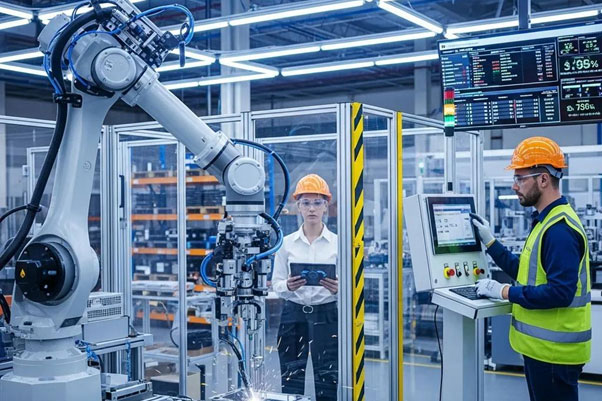
Orbital Mekatronik provides industrial automation products and application support for manual, semi-automatic and fully automated assembly systems. Our portfolio covers industrial robots, pallet transfer conveyors, PLCs, HMIs, sensors, measurement devices and machine-safety products.

We support machine builders, system integrators, OEMs and manufacturers developing new assembly equipment, robotic cells and production-line upgrades across India and selected international markets.
Discuss Your Assembly Automation Requirement
Assembly and Robotics Automation Solutions โ€” Orbital Mekatronik
Why Assembly Automation Matters

Improve Assembly Speed, Accuracy and Process Control

Manual assembly remains practical for many operations. However, repeated handling, inconsistent positioning and operator-dependent processes can affect production capacity and product quality. A properly planned assembly and robotics automation system can help:

Reduce repetitive manual handling
Improve assembly repeatability
Maintain consistent production cycles
Detect missing or incorrectly fitted components
Control fastening, pressing and dispensing operations
Position parts accurately for processing
Automate machine loading and unloading
Improve operator safety around moving equipment
Track products through different assembly stages
Record inspection and process results
Reduce rejected parts and rework
Support multiple product variants
Improve fault identification
Increase production capacity
Provide better visibility of line performance

The appropriate automation level depends on production volume, component variation, process complexity, target cycle time, required accuracy and available investment.

Assembly Technologies

Assembly and Robotics Technologies We Offer

Our integrated portfolio covers industrial robots, Cartesian, Desktop, and SCARA robots, pallet transfer conveyors, PLCs, sensors, measurement devices, and machine safety systems. Select a tab to explore each building block.

Automated Production Motion

Industrial Robots

Industrial robots automate repetitive component-handling and production operations. Orbital Mekatronik offers Cartesian, desktop, SCARA and specialised wafer-transfer robots selected according to complete application payload, reach, cycle time, and repeatability.

Typical Applications

Component pick-and-place
Part orientation and transfer
Machine loading and unloading
Screwdriving & fastening
Dispensing, gluing & soldering
Accepted and rejected part sorting
Linear Multi-Axis Motion

Cartesian Robots

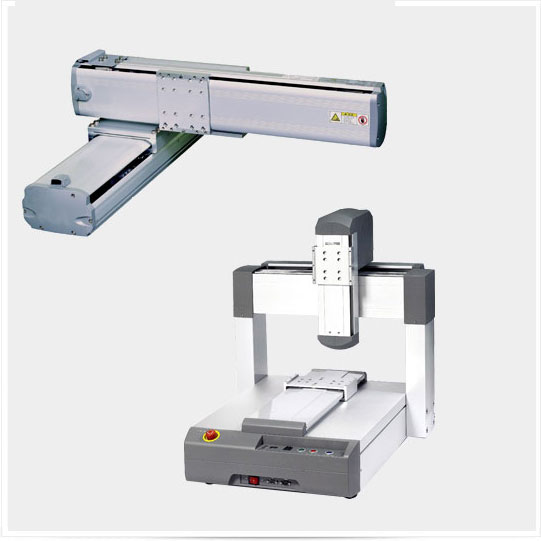
Cartesian robots use coordinated linear axes to move components within a defined rectangular working area. Ideal for long-stroke component transfer, pick-and-place, machine tending, and precision path dispensing.

Typical Applications

Long-stroke component transfer
Machine tool tending & loading
Programmed path dispensing
Inspection-device positioning
Palletising and tray handling
Multi-station assembly lines
Benchtop Workstation Automation

Desktop Robots

Desktop robots provide automated movement within a compact workspace on a workbench or station. Features easy teach pendants and dedicated algorithms for precision dispensing, screw tightening, soldering, micro-assembly, and testing.

Typical Applications

Precision fluid dispensing & gluing
Automated screw tightening
Soldering & wire joining
Small-component insertion
Benchtop part inspection & testing
Electronics & medical device assembly
High-Speed Horizontal Handling

SCARA Robots

SCARA robots combine rapid horizontal movement with controlled vertical insertion and rotational positioning. Perfect for short-cycle pick-and-place, assembly, kitting, parts sorting, and screwdriving.

Typical Applications

High-speed pick-and-place
Automated component assembly
Tray loading & kitting
Parts sorting & packaging
Machine feeding & screwdriving
Inspection and rejection
Modular Workpiece Transport

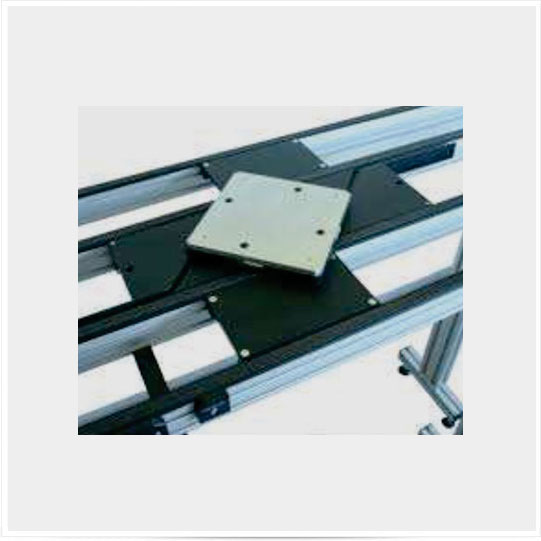
Pallet Transfer Conveyors

Pallet transfer conveyors move workpieces between manual and automatic stations in custom holding fixtures. Featuring Elcom TLM 1000, TR, TRM, and TM systems with controlled movement, accumulation, stopping, and RFID tracking.

Typical Applications

Multi-station assembly lines
Workstation stopping & positioning
Pallet accumulation & return paths
Parallel process routes
Product identification and tracking
Small to heavy industrial assemblies
Logic & Operator Interface

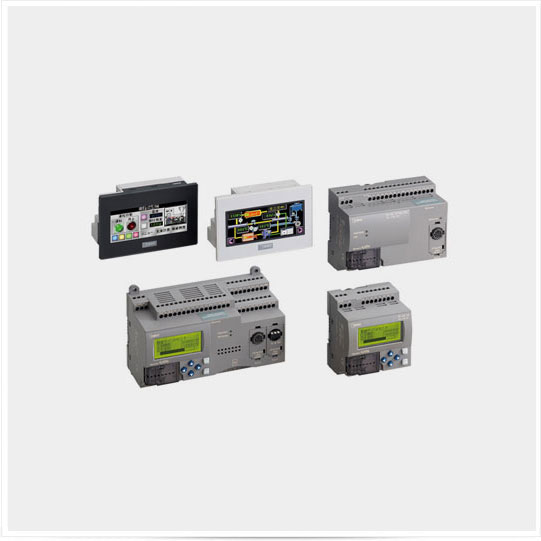
PLC, HMI and SCADA Systems

The PLC controls the master sequence between robots, sensors, conveyors, fixtures, and process equipment. HMIs enable multi-model recipe selection, fault diagnostics, and SCADA central data monitoring.

Typical Applications

Assembly machine sequence control
Product recipe management
Robot & conveyor synchronization
Alarm notification & fault diagnostics
SCADA plant-wide line monitoring
Line recovery after error stopping
Object Detection & Verification

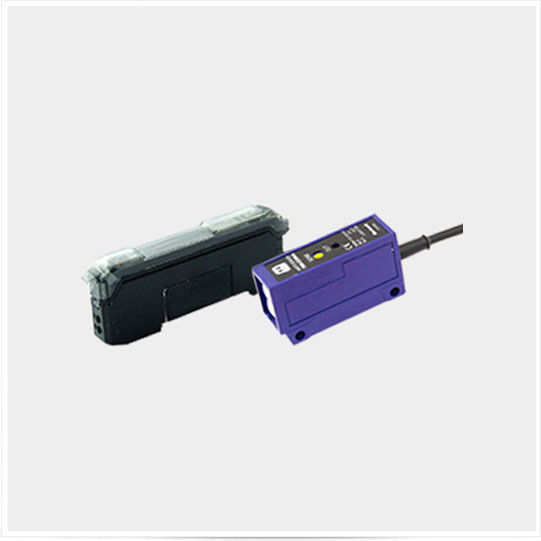
Industrial Sensors

Sensors confirm the presence, position, orientation, and movement of components during assembly. Including photoelectric, inductive, capacitive, area, laser, color/contrast, and ultrasonic sensors.

Typical Applications

Component presence & seating check
Part orientation & alignment sensing
Feeder bowl & tray level detection
Color mark & contrast verification
Laser height & profile measurement
Workpiece fixture clamp sensing
Precision Feedback Systems

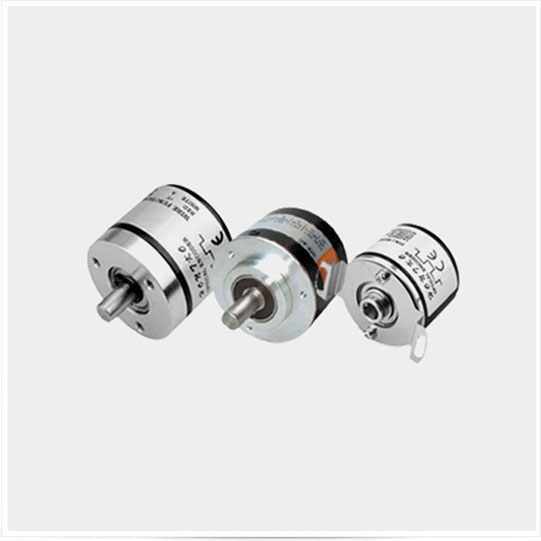
Position and Measurement Devices

Position feedback technologies verify machine movement, fixture location, and controlled displacement. Features rotary encoders, linear potentiometers, transducers, wire-draw encoders, and optical linear scales.

Typical Applications

Rotary encoder shaft position
Linear transducer press stroke depth
Linear potentiometer slide feedback
Wire-draw long travel measurement
Optical linear scale axis travel
Digital readout systems & feedback
Personnel Protection

Machine-Safety Systems

Integrated stopping and restart-control safety solutions for automated machinery and robotic cells. Includes safety light curtains, laser scanners, interlocked access doors, E-stops, relays, and perimeter fencing.

Typical Applications

Robotic cell entry light curtains
Safety laser scanner area guarding
Interlocked safety gate access doors
Emergency stop buttons & stations
Safety relay & controller logic
Physical perimeter guarding fencing
Assembly Applications

Exact Assembly and Robotics Applications

01

Automated Pick-and-Place

Pick components from trays, feeders, conveyors or fixtures and move them to the next assembly or processing position.

02

Component Insertion and Fitting

Insert pins, bearings, connectors, bushes, seals, clips and other parts with controlled positioning and process confirmation.

03

Automated Screwdriving and Fastening

Position and tighten screws using controlled torque, fastening confirmation and part-presence detection.

04

Press-Fit Assembly

Load components into a fixture, verify their position and control the pressing sequence with force or displacement monitoring.

05

Adhesive, Sealant and Grease Dispensing

Apply a controlled material quantity along a programmed point or path using a desktop, Cartesian or SCARA robot.

06

Machine Loading and Unloading

Transfer parts into and out of CNC machines, presses, testing machines, marking equipment or special-purpose machinery.

07

Vision-Guided Component Handling

Use a camera system to identify a component's location, orientation or quality before a robot picks, positions or sorts it.

08

Inspection and Rejection

Check component presence, dimensions, colour, orientation, marking or assembly condition and separate rejected products automatically.

09

Pallet-Based Assembly Lines

Move products between manual, robotic, testing and inspection stations while keeping each workpiece in a repeatable fixture position.

10

Tray Loading and Unloading

Transfer components between production fixtures and organised trays for the next process, storage or dispatch.

11

Electronics Assembly

Automate dispensing, soldering, screwdriving, connector insertion, PCB handling and small-part inspection.

12

Product Testing and Traceability

Connect electrical, leak, dimensional or functional testing to the line control system and record results against individual products.

Assembly Options

Manual, Semi-Automatic or Fully Automatic Assembly?

Not every assembly process requires full automation. The best approach balances production demand, product life, changeover frequency, quality requirements, and return on investment.

Option 01

Manual Assembly with Error-Proofing

Operators complete the assembly while sensors, guided instructions, and error-proofing (Poka-Yoke) fixtures help prevent missed or incorrect assembly steps.

Best Suited For: Lower production volumes or frequently changing product variants.
Option 02

Semi-Automatic Assembly

The operator loads and unloads the component while the machine performs controlled operations such as pressing, fastening, testing, dispensing, or inspection.

Best Suited For: Balancing flexibility, capital investment, cycle speed, and production consistency.
Option 03

Fully Automatic Assembly

Automatic feeders, industrial robots, pallet conveyors, process equipment, and inline vision complete the full sequence with minimal operator involvement.

Best Suited For: Higher production volumes, stable product designs, and tight cycle-time goals.
Industries We Serve

Assembly & Robotics Automation Solutions Support:

Automotive and auto-component manufacturing
Electronics and electrical assembly
Medical device and healthcare products
Plastics, rubber and injection moulding
Consumer goods and appliance assembly
Machine tools and metalworking equipment
Pharmaceutical and laboratory equipment
Pumps, motors and gearboxes
Special purpose machinery (SPMs)
General engineering and manufacturing
Technology Selection Criteria

How We Select the Right Automation Technology

Product selection begins with the assembly processโ€”not a particular robot or controller model. Our engineering team considers:

Component dimensions, weight & material
Required assembly operations & sequence
Target production volume & cycle time
Number of product variants & changeover frequency
Part-feeding method (trays, bowls, conveyors)
Pick and placement positions
Required working envelope & mounting space
Accuracy and positioning repeatability
Robot payload including end-effector tooling
Inspection, testing & traceability requirements
PLC & communication network compatibility
Machine-safety risk assessment requirements
New Systems, Upgrades & Retrofits

Orbital Mekatronik supports assembly requirements for:

New automated assembly machines
Robotic pick-and-place cell development
Manual-to-automatic process conversion
Conveyor line extensions & pallet transport
Quality error-proofing & safety upgrades

Share your component drawings, current assembly sequence, production rate, available layout, and inspection criteria. Our team will help design a complete assembly automation concept.

Request Assembly Automation Support
Why Choose Orbital Mekatronik?

Why Choose Orbital Mekatronik for Assembly Automation?

One Partner for Integrated Automation Products

Source robotics, conveyors, sensors, measurement devices, control products, and machine safety from a single industrial solution provider.

Application-Based Product Selection

We study your workpiece, process sequence, speed goals, and layout before recommending specific automation hardware.

Robotics & Pallet Transfer Technologies

Choose from Cartesian, desktop, and SCARA robots combined with Elcom modular pallet transfer systems for coordinated assembly flow.

Safety Integrated into the Application

Certified safety light curtains, laser scanners, interlocks, and controllers integrated to protect operators without reducing output.

Pan-India Supply & Technical Support

Serving machine builders, panel builders, system integrators, and OEMs across India from our facility near Mumbai.

Discuss Your Assembly Automation Project

Planning a new assembly machine, robotic cell, or production-line upgrade?

Share your component drawings, assembly sequence, production target, cycle time, inspection requirements, available space, and current process. Our team will help identify suitable robotics, sensing, control, conveyor, and safety technologies for detailed technical evaluation.
Frequently Asked Questions

Frequently Asked Questions

1. What is assembly automation?
Assembly automation uses controlled machines, robots, sensors and tooling to complete or assist product assembly operations.
2. Which assembly operations can be automated?
Pick-and-place, component insertion, pressing, screwdriving, dispensing, soldering, testing, inspection, sorting and product transfer can commonly be automated.
3. Does every assembly line require an industrial robot?
No. Some processes are better handled using dedicated actuators, Cartesian axes, pallet conveyors or operator-assisted fixtures.
4. Which robots does Orbital Mekatronik offer?
The range includes Cartesian robots, desktop robots, SCARA robots and specialised wafer-transfer robots.
5. How do I choose between a Cartesian and SCARA robot?
A Cartesian robot is suitable for controlled linear travel and rectangular working areas. A SCARA robot is often preferred for faster horizontal handling and assembly.
6. When should a desktop robot be used?
Desktop robots are suitable for compact operations such as dispensing, soldering, screwdriving and small-component assembly.
7. Can robots be added to an existing assembly line?
Yes. The available space, process sequence, machine interfaces, safety requirements and target cycle time must first be studied.
8. What information is required to select an industrial robot?
Provide the component size and weight, movement positions, required cycle time, working area, mounting arrangement, accuracy and process sequence.
9. What is an end effector?
It is the gripper, vacuum tool, dispensing head or other device attached to the robot to handle a product or perform a process.
10. Can one robotic cell handle different products?
It may be possible using changeable grippers, adjustable fixtures, recipes and suitable inspection. The product differences must be evaluated.
11. How are components supplied to an automated assembly system?
Components may be supplied using trays, pallet conveyors, bowl feeders, flexible feeders, magazines or manual loading stations.
12. How can an automated system detect a missing component?
Suitable proximity, photoelectric, laser, vision or other sensors can confirm component presence and position.
13. Can assembly results be recorded?
Yes. The control system can record testing, inspection, fastening and process results when suitable identification and data systems are included.
14. What is a pallet transfer assembly line?
It moves products on dedicated workpiece pallets between manual and automated assembly, testing and inspection stations.
15. What safety equipment is required for a robotic cell?
Depending on the risk assessment, it may require physical guarding, interlocked gates, light curtains, laser scanners, emergency stops and safety control devices.
16. Can an assembly process be partially automated?
Yes. A semi-automatic machine can allow the operator to load the product while the machine performs controlled assembly, testing or inspection.
17. How do I decide whether automation is commercially practical?
Evaluate production volume, labour involvement, rejection costs, target cycle time, product stability, quality requirements and expected equipment life.
18. Does Orbital Mekatronik supply assembly automation products across India?
Yes. Orbital Mekatronik supports machine builders, integrators, OEMs and industrial manufacturers across India and selected export markets.