

Looking for an ELAP fieldbus absolute encoder in India for position feedback, motor control, machine automation or an existing encoder replacement? Orbital Mekatronik supplies ELAP MEM-Bus and MEM40-Bus absolute encoders with industrial communication interfaces including: PROFIBUS DP, PROFINET, EtherCAT, EtherNet/IP, CANopen, and IO-Link smart sensor communication. Available configurations include single-turn and multi-turn position measurement, solid-shaft and hollow-shaft mounting, round and square flanges, configurable resolution, electronic preset and diagnostic functions.
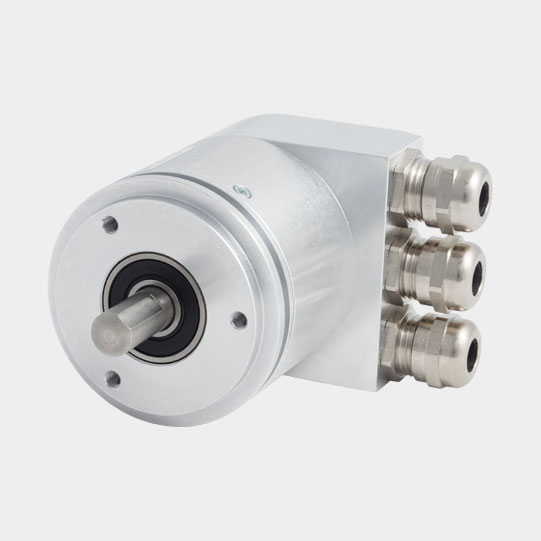
Orbital Mekatronik Systems Pvt. Ltd. is listed by ELAP as its official reseller in India. We support machine manufacturers, automation integrators, panel builders and industrial plants with fieldbus selection, mechanical configuration, PLC compatibility and commercial quotations.
Share the required communication protocol, single-turn or multi-turn requirement, shaft size, flange type, resolution, supply voltage, PLC make and existing encoder model. Our team will help identify a suitable ELAP configuration.
ELAP identifies its position sensors and automation products for machinery used in sheet metal, wood, paper, glass, plastic, textile, food processing, industrial graphics and material-handling applications.
Need ELAP encoder pricing or help selecting the correct industrial communication interface?
Share the protocol, encoder model, single-turn or multi-turn requirement, shaft or bore diameter,
flange dimensions, PLC make, resolution and required quantity.
An absolute fieldbus encoder measures shaft position and transmits the position value directly to an industrial controller through a digital communication network.
Unlike an incremental encoder, an absolute encoder retains a unique position value. The controller can therefore identify the shaft position after power is restored without necessarily returning the machine to a mechanical reference point. ELAP offers absolute encoder interfaces including EtherNet/IP, EtherCAT, PROFINET, PROFIBUS, CANopen and IO-Link.
A single-turn encoder measures the angular position within one complete shaft revolution. After the shaft completes one full turn, the position sequence begins again.
A single-turn encoder may be suitable for:
ELAP’s current PROFIBUS MEM-Bus range is available in a single-turn version with 13-bit resolution, corresponding to 8,192 positions per revolution.
A multi-turn encoder measures the angular position within each revolution and the number of complete shaft revolutions. This makes it suitable for machinery where position must be measured over multiple turns.
Common applications include:
ELAP MEM-Bus multi-turn encoders commonly provide 29-bit total resolution, consisting of 13 bits or 8,192 positions per revolution and 16 bits or 65,536 revolutions.
ELAP MEM-Bus PROFIBUS encoders are available in both single-turn and multi-turn versions.
Published PROFIBUS SpecificationsUser-settable parameters include steps per revolution, total revolutions, preset value and rotation direction. Diagnostic functions identify parameter or position errors and provide a battery alarm.
Mechanical PROFIBUS ConfigurationsDepending on the selected model, options include round flange with solid shaft, round flange with servo coupling, square flange with solid shaft, blind hollow shaft, or hollow shaft with elastic support. Solid shafts of 6, 8 or 10 mm; hollow-shaft bores from 8 to 15 mm. Electrical connection is through three cable glands on the current PROFIBUS range.
Suitable ApplicationsELAP MEM-Bus PROFINET encoders provide 29-bit multi-turn position measurement for Ethernet-based industrial automation networks.
They comply with Encoder Profile V4.1, support application classes 3 and 4, and provide RT and IRT communication modes. ELAP also supports standard telegrams 81, 82, 83 and 84, together with user telegram 860.
Published PROFINET SpecificationsThe encoder supports scaling, preset, rotation direction, position and speed values, together with continuously active device diagnostics. ELAP states that user telegram 860 mirrors the PROFIBUS telegram and can simplify migration from PROFIBUS-based systems.
Suitable ApplicationsELAP MEM-Bus EtherCAT encoders use the CANopen over EtherCAT protocol and comply with the CiA DS-406 encoder profile.
The protocol supports real-time master-to-slave communication and network topologies including line, bus, tree and star arrangements.
Published EtherCAT SpecificationsSettable parameters include counting direction, measuring steps per revolution, total measuring length, preset value and speed resolution.
Suitable ApplicationsELAP MEM-Bus EtherNet/IP encoders are designed for industrial Ethernet networks based on the Common Industrial Protocol.
They support encoder profile 22H and are ODVA conformant, including CIP Sync certification for time-synchronised motion applications.
Published EtherNet/IP Functions & SpecsSettable parameters include steps per revolution, revolution count, preset, rotation direction and measuring unit.
Suitable ApplicationsELAP offers CANopen fieldbus encoders in both standard MEM-Bus formats and compact MEM40-Bus and MEM41-Bus configurations.
The compact MEM40-Bus range complies with CiA DS301, DS406 and DS305 and supports Class 2 encoder functions.
Published CANopen SpecificationsMEM40-Bus: Body dia ~41 mm, round flange, servo coupling dia 36 mm, solid shaft 10 mm.
MEM41-Bus: Body dia ~41 mm, hollow shaft 10 mm, elastic support mounting.
Suitable ApplicationsELAP also provides MEM-Bus and compact MEM40-Bus encoders with IO-Link communication.
IO-Link is a point-to-point communication protocol that connects intelligent sensors to an IO-Link master, which can then communicate with an Ethernet or industrial fieldbus network. ELAP’s current IO-Link encoders provide 29-bit multi-turn resolution, reduced wiring, automatic device parameterisation and diagnostic functions for parameter, position and temperature conditions.
Suitable ApplicationsIO-Link should be selected as a smart sensor interface rather than treated as a direct replacement for every conventional fieldbus encoder.
The available flange and shaft configuration depends on the protocol and encoder family.
| ELAP Series | Mechanical Configuration | Typical Shaft Option |
|---|---|---|
| MEM520-Bus | Round flange with servo coupling | Solid shaft, 6, 8 or 10 mm |
| MEM540-Bus | Round flange with 36 mm centring diameter | Solid shaft, 6, 8 or 10 mm |
| MEM620-Bus | 63.5 × 63.5 mm square flange | Solid shaft, 6, 8 or 10 mm |
| MEM440/MEM410-Bus | Blind hollow-shaft mounting | Bore from 8 to 15 mm |
| MEM450-Bus | Hollow shaft with elastic support | Bore from 8 to 15 mm |
| MEM40-Bus | Compact 41 mm round-flange encoder | Solid shaft, 10 mm |
| MEM41-Bus | Compact hollow-shaft encoder | Hollow shaft, 10 mm |
Not every mechanical series is offered with every communication protocol. The complete model code, flange, shaft, connection and network interface must be confirmed before ordering.
A solid-shaft encoder connects to the machine shaft through a flexible shaft coupling.
It may be preferred when:
The coupling, shaft diameter and mounting alignment must be selected carefully to prevent excess axial or radial load.
A hollow-shaft encoder mounts directly over the machine or motor shaft.
It may be preferred when:
Confirm the shaft diameter, insertion depth, torque support and available mounting space before ordering.
Identify the exact controller network: PROFIBUS DP, PROFINET, EtherCAT, EtherNet/IP, CANopen, or IO-Link. These protocols are not interchangeable. The encoder must match the PLC, motion controller or network master.
2. Choose Single-Turn or Multi-TurnChoose single-turn when only the angular position inside one revolution is required. Choose multi-turn when the controller must also know how many complete revolutions have occurred.
3. Confirm ResolutionThe current MEM-Bus families commonly provide: 8,192 positions per revolution, 13-bit single-turn resolution, 65,536 recorded revolutions, 16-bit multi-turn revolution count, 29-bit combined multi-turn resolution. The required programmable resolution may be lower than the encoder’s maximum physical resolution.
4. Confirm Shaft and FlangeProvide details: Solid or hollow shaft, shaft or bore diameter, round or square flange, centring diameter, bolt-hole pattern, elastic support requirement, available installation space.
5. Check Network ConnectorsDepending on protocol, the encoder may use cable glands, M12 power connector, M12 bus-in connector, M12 bus-out connector, radial or axial orientation. The connector type and exit direction must suit the machine layout.
6. Confirm Supply Voltage & ProtectionPublished supplies vary: PROFIBUS MEM-Bus (5–28 VDC), PROFINET, EtherCAT, EtherNet/IP, Compact CANopen (10–30 VDC). Protection levels vary from IP64/IP65 to IP67 housing protection with IP65 shaft-side protection.
7. Confirm Programmable Parameters & PLC FilesConfigurable values include counting direction, steps/rev, total measuring range, preset value, speed unit, alarm thresholds, node address, baud rate, IP address. Confirm PLC software and required engineering files: GSD (PROFIBUS), GSDML (PROFINET), ESI (EtherCAT), EDS (EtherNet/IP/CANopen), or IODD (IO-Link).
Before replacing an encoder, provide:
Do not select a replacement only by shaft size and protocol. Device profile, network configuration, resolution, preset behaviour, connector pinout and mechanical dimensions must also be checked.
Get support for protocol selection, mechanical configuration, replacement identification and project-based procurement.