
View E-Catalogue

Home > Solutions > Industrial Sensor Solutions

Industrial Sensor Solutions

Industrial Sensor Solutions for Detection, Positioning and Process Control

Reliable Detection for Smarter Industrial Automation

Detect objects, confirm positions, inspect products and monitor automated processes with industrial sensors selected for your exact application.

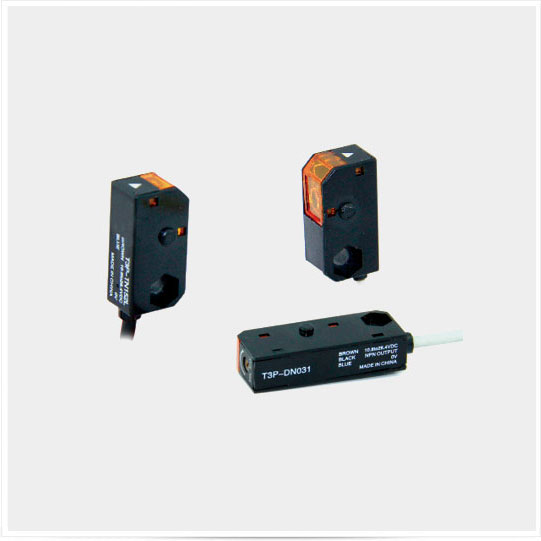
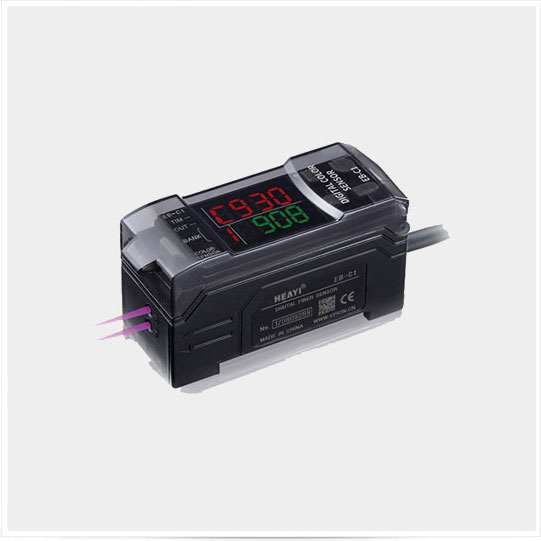
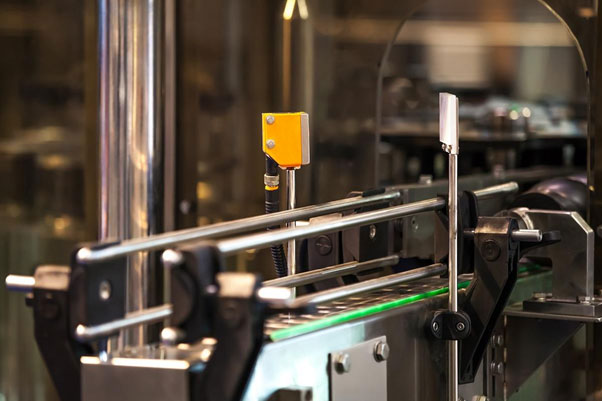
Orbital Mekatronik provides industrial sensor solutions for machines, packaging lines, conveyors, assembly systems and inspection equipment. Our range includes proximity, capacitive, photoelectric, fibre-optic, laser displacement, colour-mark, ultrasonic and area sensors.

We support OEMs, machine builders, system integrators and manufacturing plants with application-based sensor selection across India and international markets.
Discuss Your Sensor Application
Industrial sensor solutions โ€” Orbital Mekatronik
Why Sensor Selection Matters

Solve Detection Problems Before They Cause Downtime

Incorrect sensor selection can result in false detection, missed products, irregular machine cycles and frequent production stoppages. A properly selected sensor solution can help you:

Detect metallic and non-metallic objects
Count products moving on a conveyor
Confirm component presence or absence
Check part position and alignment
Detect labels, registration marks and colour differences
Monitor liquid, powder or granule levels
Measure distance, height, thickness or displacement
Detect very small objects in restricted spaces
Support sorting, inspection and rejection systems
Improve repeatability in high-speed automation

The correct choice depends on the target material, sensing distance, object size, background, speed, mounting space, environment and required output.

Sensor Technologies

Industrial Sensor Technologies We Offer

Our portfolio covers eight distinct sensing technologies. Select a tab to explore typical targets and applications for each technology.

Inductive / Non-contact

Proximity Sensors

Proximity sensors detect objects without physical contact. Inductive proximity sensors are commonly used to detect metallic components, machine parts, gears, fixtures and end positions.

Typical Applications

Metal-part detection
Cylinder and slide-position confirmation
Component counting
Machine-tool automation
Assembly fixture monitoring
Conveyor positioning
Metallic & Non-metallic

Capacitive Sensors

Capacitive sensors can detect metallic and non-metallic materials. They are suitable for sensing plastics, glass, paper, powders, granules and liquids, including through certain non-metallic container walls.

Typical Applications

Liquid-level detection
Powder and granule monitoring
Plastic-container detection
Packaging material detection
Hopper and bin-level monitoring
Through-beam / Retro / Diffuse

Photoelectric Sensors

Photoelectric sensors use light to detect an object, change in contrast or interruption of a beam. Through-beam, retro-reflective and diffuse sensing arrangements can be selected according to the target and installation.

Typical Applications

Product counting on conveyors
Bottle and carton detection
Component presence checking
Packaging-machine control
Sorting and material handling
Entry and exit monitoring
Compact Head / Tight Spaces

Fibre-Optic Sensors

Fibre-optic sensors use compact sensing heads that can reach narrow or difficult machine areas. They are useful for detecting small components where installation space is limited.

Typical Applications

Small electronic-part detection
Restricted machine spaces
Semiconductor equipment
High-speed counting
Component orientation checks
Precise assembly applications
Non-contact Measurement

Laser Displacement Sensors

Laser displacement sensors provide non-contact measurement of distance, position, height, thickness and surface variation. They are suitable where simple object detection is not enough and measured feedback is required.

Typical Applications

Part-height inspection
Thickness measurement
Position and alignment checking
Surface and profile inspection
Fill-level verification
Precision assembly monitoring
Registration / Contrast

Colour-Mark Sensors

Colour-mark sensors detect printed registration marks and changes in colour or contrast. They help packaging and printing machines perform cutting, sealing, labelling and positioning at the correct point.

Typical Applications

Registration-mark detection
Pouch cutting and sealing
Label-position control
Printing-machine synchronisation
Colour-based sorting
Packaging-film detection
Sound Wave / Transparent Targets

Ultrasonic Sensors

Ultrasonic sensors use sound waves to detect objects or measure distance. They can be suitable for targets where colour, transparency or surface appearance makes optical sensing difficult.

Typical Applications

Transparent-object detection
Tank and container-level monitoring
Roll-diameter measurement
Distance measurement
Conveyor-flow monitoring
Irregular-object detection
Zone Detection / Pick-to-Light

Area and Bin Sensors

Area sensors monitor a wider detection zone than a single-point sensor. Bin and pick-to-light sensors can guide operators during part picking, assembly and material-handling processes.

Typical Applications

Pick-to-light systems
Parts-bin monitoring
Assembly sequence guidance
Object-height checking
Multi-point detection
Error-proofing stations
Application Scenarios

Sensor Solutions for Exact Industrial Applications

01

Packaging and Labelling Machines

Detect pouches, bottles, caps, labels and printed registration marks. Sensor feedback can control filling, sealing, cutting, labelling and rejection operations.

02

Conveyor Counting and Sorting

Count products, identify gaps, detect jams and trigger sorting or rejection mechanisms on automated conveyor systems.

03

Assembly Error-Proofing

Confirm that the correct component is present, positioned and picked during manual or automated assembly.

04

Liquid and Material-Level Monitoring

Detect liquids, powders or granules in tanks, containers, hoppers and bins using a suitable capacitive or ultrasonic solution.

05

Quality Inspection

Measure component height, distance, thickness, alignment or surface variation without physical contact.

06

Robotics and Pick-and-Place Systems

Confirm component availability, grip position, fixture status and placement before the next robot cycle begins.

07

Printing and Flexible Packaging

Read colour or contrast marks so printed films can be cut, folded and sealed in the correct position.

08

Electronics and Semiconductor Equipment

Detect small components and confirm precise placement in machines with limited mounting space.

Industries We Serve

Our industrial sensor solutions support:

Automotive and auto-component manufacturing
Packaging and printing
Food and beverage processing
Pharmaceutical manufacturing
Electronics and semiconductor production
Warehousing and logistics
Machine tools and CNC equipment
Plastics and rubber processing
Material handling
General engineering and assembly
How We Select the Right Sensor

Sensor Selection Starts with the Target and Operating Conditions

Sensor selection should begin with the target and operating conditions โ€” not only the sensing distance. Testing with the actual target may be recommended where the material is transparent, reflective, very small or inconsistent.

Material to be detected
Target size, shape, colour and surface
Required sensing or measuring range
Background and surrounding objects
Machine and conveyor speed
Response-time requirement
Available mounting space
Ambient light and electromagnetic interference
Dust, oil, moisture, vibration and temperature
Transparent or reflective target surfaces
Switching or analogue output requirement
NPN or PNP control compatibility
Supply voltage and electrical connection
PLC or control-system interface
New Machines, Retrofits and Sensor Replacements

Orbital Mekatronik supports sensor requirements for:

New machine development
Existing-machine upgrades
Production-line automation
Replacement of obsolete sensors
Sensor standardisation across machines
Inspection-system development
Packaging-line modifications
Conveyor and warehouse automation

For faster selection, share the target material, object size, sensing distance, machine speed, surrounding environment, mounting arrangement, existing sensor details and control output required.

Request Sensor Selection Support
Why Choose Orbital Mekatronik?

Why Choose Orbital Mekatronik?

Application-Based Sensor Selection

We evaluate what must be detected or measured before recommending the sensor technology.

Comprehensive Sensor Range

Our industrial sensor portfolio covers proximity, capacitive, photoelectric, fibre-optic, laser displacement, colour-mark and ultrasonic sensing technologies.

Support for OEMs and Industrial Users

We work with machine builders, automation integrators, panel builders and manufacturing plants.

Automation and Control Experience

Our experience across industrial sensing, measurement, controls, robotics and conveyors supports easier system integration.

Supply Across India and Export Markets

We serve industrial customers across India and support selected international requirements from our facility near Mumbai.

Get the Right Sensor for Your Application

Need to detect a small component, transparent bottle, printed registration mark, material level or precise dimensional change?

Share your application details, target sample, photographs, mounting space and control requirements. Our team will help shortlist a suitable sensing technology for technical evaluation.


Frequently Asked Questions

Frequently Asked Questions

What is an industrial sensor solution?
It combines the appropriate sensor, mounting arrangement and control interface to detect, inspect, measure or monitor an industrial process.
Which industrial sensors does Orbital Mekatronik offer?
The range includes proximity, capacitive, photoelectric, fibre-optic, laser displacement, colour-mark, ultrasonic and area sensors.
Which sensor is best for detecting metal?
An inductive proximity sensor is commonly used for non-contact detection of metallic objects.
Which sensor detects plastic, powder or liquid?
A capacitive sensor may detect these materials. Suitability depends on the material, container and required sensing distance.
Which sensor is used for product counting?
Photoelectric and fibre-optic sensors are commonly used for high-speed product counting.
Can a sensor detect transparent bottles?
Yes. A suitable photoelectric or ultrasonic sensor may be used, depending on the bottle and application conditions.
What is a colour-mark sensor used for?
It detects printed registration marks or contrast differences in packaging, labelling and printing machines.
What does a laser displacement sensor measure?
It can measure distance, position, height, thickness or displacement without touching the target.
When should a fibre-optic sensor be used?
It is useful for very small objects, restricted mounting spaces and precise detection points.
Which sensor is suitable for tank-level monitoring?
Capacitive or ultrasonic sensors may be suitable, depending on the material, tank construction and measurement requirement.
What is the difference between NPN and PNP output?
They are different transistor-output configurations. The sensor must match the PLC input or machine-control circuit.
How do I select the correct sensing distance?
Consider the target material, size, mounting position, movement and surrounding objects โ€” not only the sensor's maximum rated range.
Can industrial sensors work in dusty or wet conditions?
Yes, provided the selected sensor has an appropriate enclosure rating and is suitable for the actual operating environment.
Can Orbital Mekatronik replace an obsolete sensor?
Yes. Share the existing model number, datasheet, wiring, target and application details to identify a possible replacement.
Does Orbital Mekatronik supply industrial sensors across India?
Yes. The company supports OEMs, system integrators and industrial users across India, with export support for selected requirements.